Psoas tendonitis—also called iliopsoas tendinopathy—is an irritation or inflammation of the iliopsoas tendon that causes deep groin pain in runners. It develops from repetitive hip flexion, training errors, and muscle imbalances. With structured rehabilitation across three phases, most runners make a full recovery and return to running stronger than before.
You’re two miles into a run when a deep, nagging ache settles into your groin. You push through, hoping it’ll warm up and disappear. It doesn’t. You rest for a few days, try again—and the pain returns within minutes. Sound familiar?
This kind of persistent groin pain often gets misdiagnosed or dismissed, yet it has a very specific cause: psoas tendonitis, or more precisely, iliopsoas tendinopathy. It’s one of those injuries that runners frequently overlook because the groin isn’t an obvious “running injury zone” the way the knee or Achilles tendon might be. But the iliopsoas—the powerful hip flexor that drives every stride you take—is under enormous load each time your foot hits the pavement.
Understanding why this injury happens, how to recognize it early, and what a proper recovery looks like can be the difference between a few weeks off and months of frustration. This guide walks you through everything you need to know: the anatomy behind the pain, the symptoms to watch for, practical steps to take when pain strikes, evidence-informed rehabilitation phases, and when it’s time to bring in a sports medicine professional.
Whether you’re dealing with groin pain right now or simply want to prevent it, this is the resource you need.
What Is Psoas Tendonitis?
…and Why Runners Should Know About It
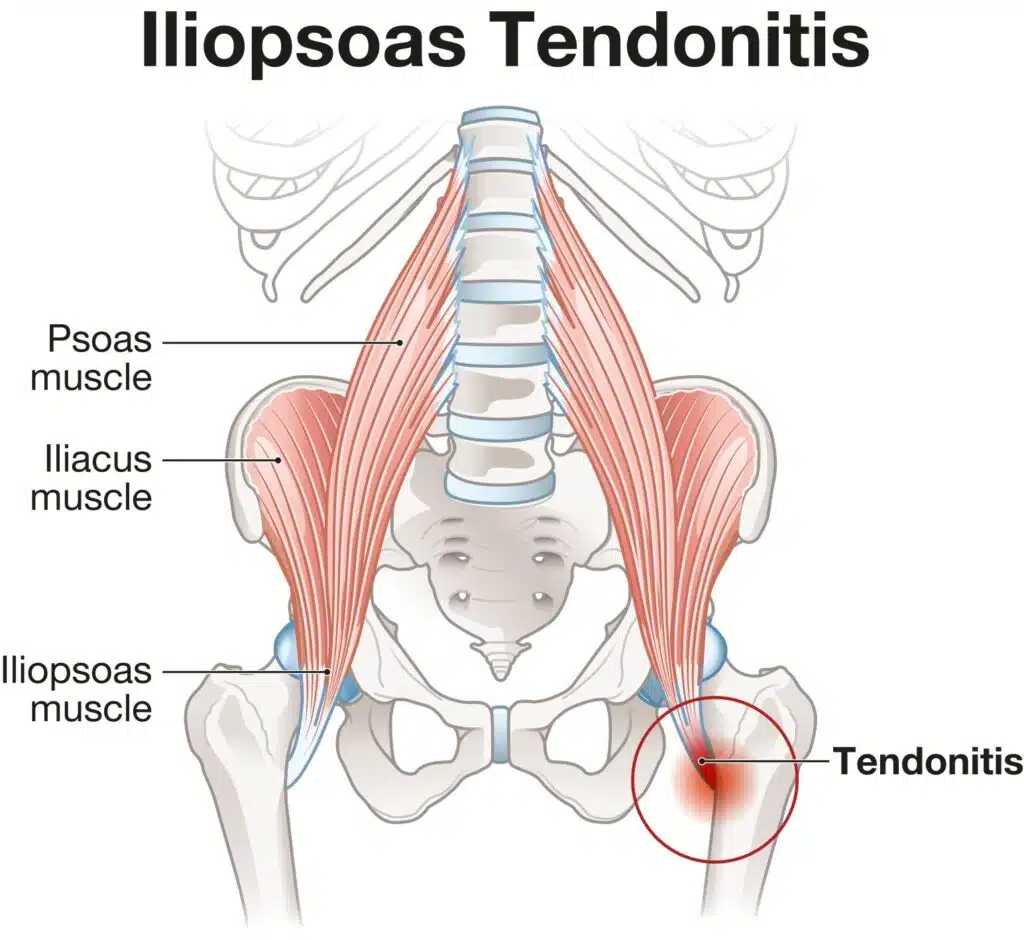
The iliopsoas is actually two muscles—the psoas major and the iliacus—that merge into a single tendon before attaching to the lesser trochanter of the femur (the inner aspect of the upper thigh bone). The psoas originates along the lumbar spine (L1–L5), while the iliacus arises from the iliac fossa of the pelvis. Together, they form the body’s primary hip flexor, responsible for lifting the thigh forward with each stride.
As the iliopsoas tendon travels across the front of the hip, it passes through a groove between two bony landmarks. The largest bursa in the body, the iliopsoas bursa, sits between the tendon and the underlying pelvis. According to clinical literature, this bursa communicates with the hip joint in approximately 15% of adults, which means hip joint problems and iliopsoas problems can overlap and amplify one another.
When the tendon is tight or repeatedly loaded beyond its tolerance, it can snap over the bony landmarks beneath it. When painless, this is called asymptomatic internal snapping hip. When accompanied by pain, it’s commonly labeled iliopsoas tendinitis, tendinopathy, or iliopsoas bursitis. Clinically, tendinitis and bursitis are essentially synonymous -inflammation in one structure reliably generates inflammation in the other, and the presentation, evaluation, and management are nearly identical.
Tendinitis vs. tendinopathy: why the distinction matters
The term “tendinitis” implies active inflammation, but current evidence tells a more nuanced story. Acute cases may involve genuine inflammation, but chronic psoas tendon problems are better described as tendinopathy—a failed healing response accompanied by tendon degeneration and fibrosis rather than ongoing inflammation. This distinction matters because anti-inflammatory treatments (like prolonged NSAID use or corticosteroid injections) are often ineffective for chronic tendinopathy and may actually impair long-term healing.
Related conditions to be aware of
Iliopsoas bursitis: Inflammation of the bursa beneath the tendon; presents nearly identically to tendinitis
Internal snapping hip: The tendon snapping audibly or palpably over underlying bone; may or may not be painful
External snapping hip: The iliotibial band or gluteus maximus tendon snapping over the greater trochanter—a separate condition sometimes confused with iliopsoas problems
Identifying the Pain: Symptoms of Psoas Tendonitis
Knowing what psoas tendonitis feels like—and how it differs from other groin injuries—is critical for catching it early.
The hallmark symptom: deep groin pain
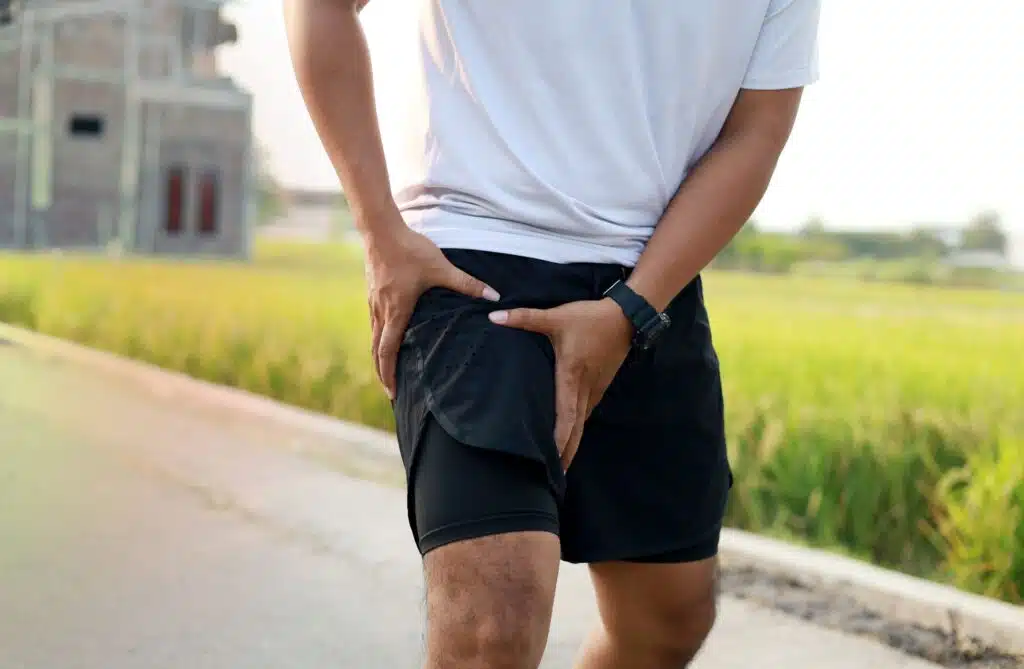
The most consistent complaint is a deep, aching pain in the groin that sometimes radiates toward the anterior hip or inner thigh. Unlike a muscle pull, which is often sharp and sudden, iliopsoas tendinopathy tends to develop gradually. Many runners describe it as a nagging discomfort that intensifies with activity and lingers afterward.
How pain manifests during a run
Pain that worsens with uphill running (which demands greater hip flexion range and load)
Discomfort during the push-off phase and early swing phase of each stride
Pain that starts mild and escalates over the course of a run
A feeling of tightness or heaviness in the front of the hip
Non-running symptoms
Stiffness and aching after prolonged sitting—particularly common in desk workers and commuters
Difficulty standing fully upright after sitting for extended periods
An audible or palpable snapping sensation in the groin region during movement
Discomfort climbing stairs, particularly when lifting the knee high
Secondary signs runners often miss
A shortened stride length on the affected side
Increased knee flexion during the early part of the gait cycle
Tenderness when pressing into the femoral triangle (the region bounded by the inguinal ligament above, the sartorius muscle on the outside, and the adductor longus muscle on the inside)
Lower back discomfort or buttock pain, which can occur when psoas hypertonicity affects the lumbar spine
Anterior pelvic tilt—a forward tilt of the pelvis—visible in posture or during movement
Common Causes of Psoas Tendonitis in Runners
Psoas tendonitis rarely develops from a single incident. In runners, it’s almost always the result of cumulative overload, often driven by one or more of the following factors:
Training errors
The most common culprit. Increasing weekly mileage too quickly, adding hill work too soon, or returning to high-intensity training after a break all place sudden, excessive demand on the iliopsoas tendon before it’s conditioned to handle the load.
Biomechanical issues
Poor running mechanics—such as overstriding, excessive anterior pelvic tilt, or asymmetrical hip mobility—can alter the way force is transmitted through the iliopsoas tendon during each stride. Over thousands of steps, these inefficiencies add up.
Muscle imbalances
Weakness in the hip abductors (particularly the gluteus medius), core instability, and tight hip flexors create a cascade of compensatory patterns. When the gluteal muscles aren’t pulling their weight, the iliopsoas bears a disproportionate share of the load. Clinicians frequently assess for lower crossed syndrome—a pattern of weakness in the glutes and core combined with tightness in the hip flexors and lumbar extensors—in runners with this condition.
Prolonged sitting
Spending hours at a desk keeps the hip in a shortened, flexed position, which tightens the iliopsoas over time. For professional runners who also have demanding desk jobs, this is a compounding risk factor that’s easy to underestimate.
Adolescents and growth spurts
Younger runners are particularly vulnerable during periods of rapid growth. Bones lengthen faster than muscles and tendons can adapt, creating relative tightness in the hip flexors. This mechanical disadvantage, combined with the training demands of competitive youth athletics, significantly increases injury risk.
Immediate Action Steps: What to Do When Pain Strikes
The moment you notice deep groin pain during or after running, how you respond in the first few days matters. Here’s a practical, evidence-aligned approach:
Modify activity—don’t stop entirely. Complete rest often delays recovery. Instead, reduce intensity and volume. Switch to flat-surface running or walking, and avoid hills and speed work until symptoms settle.
Avoid provocative movements. Repeated high hip flexion—like stair climbing, cycling at high resistance, or sit-ups—can perpetuate tendon irritation. Give the tendon a break from these movements.
Apply ice strategically. For acute flare-ups with noticeable swelling or warmth, ice can help manage discomfort. Apply for 15–20 minutes at a time. Note that for chronic tendinopathy, ice and NSAIDs play a limited role.
Check your footwear. Excessive foot pronation (arch collapse) is a known biomechanical contributor to iliopsoas overload. Worn-out or poorly fitting running shoes can aggravate the condition. A gait assessment by a sports medicine professional can clarify whether orthotics or arch support would help.
Do a posture audit. If you’re spending hours sitting with the hip in a flexed position, set a timer to stand and move every 30–45 minutes. Small changes in daily habits can meaningfully reduce cumulative tendon load.
Prevention Strategies: Keeping Psoas Tendonitis From Coming Back
Recovery without prevention is just injury on a delay. These strategies help runners address the root causes and reduce recurrence risk:
Follow the 10% rule for training progression
Avoid increasing weekly mileage by more than 10% per week. This applies equally to speed work and elevation gain. Structured progression allows the tendon time to adapt.
Prioritize a dynamic warm-up
Cold tendons are more vulnerable to overload. A 5–10 minute dynamic warm-up—including leg swings, hip circles, walking lunges, and high knees—increases blood flow and prepares the iliopsoas for the demands of running.
Strengthen the Kinetic Chain
Targeted hip abductor and core strengthening reduces the compensatory burden on the iliopsoas. Exercises like single-leg glute bridges, clamshells, lateral band walks, and dead bugs address the muscle imbalances and strengthen the entire kinetic chain most commonly associated with psoas tendinopathy.
Cross-train intelligently
Swimming and cycling (at low resistance) maintain cardiovascular fitness without the repetitive hip flexion loading of running. Water running is a particularly effective way to stay active during recovery phases.
Build regular mobility work into your routine
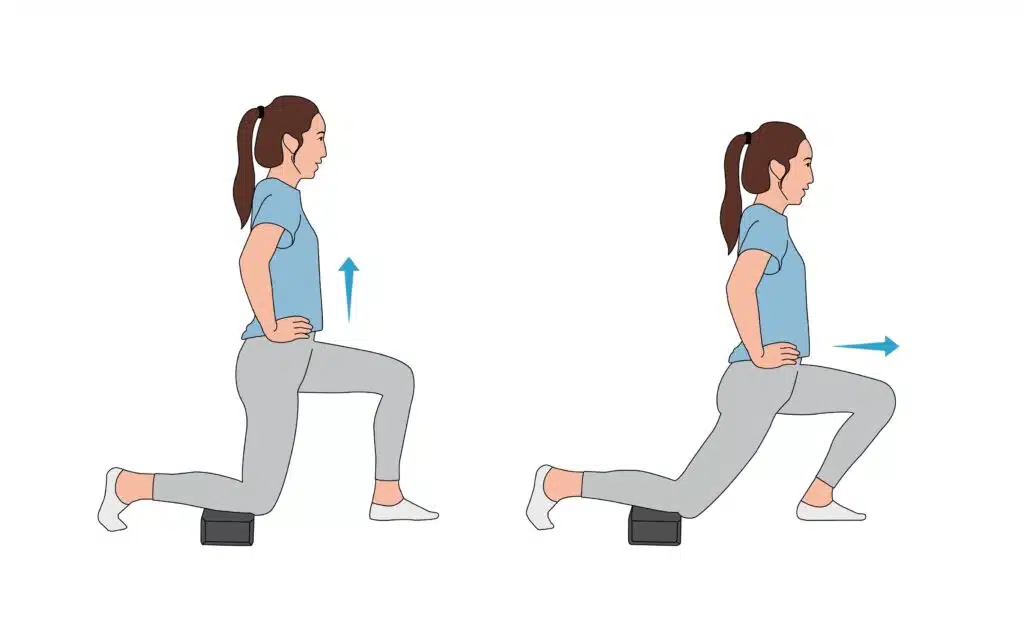
A consistent hip flexor mobility routine—including psoas-targeted stretches like the kneeling lunge—helps counteract the tightening effects of prolonged sitting and high-volume training. Yoga and targeted flexibility work are excellent complements to a running program.
When to See a Professional
Some runners try to self-manage psoas tendonitis for months before seeking help—often making the condition worse in the process. Clinical literature notes that a definitive diagnosis is often delayed more than two years while other causes of groin pain are pursued first. Don’t let that be your experience.
Red flags that warrant prompt evaluation
Groin pain that persists beyond two weeks despite activity modification
Pain severe enough to alter your gait or shorten your stride
Pain at rest or that wakes you at night
Symptoms in an adolescent runner (hip pain in children and teenagers requires imaging to rule out slipped capital femoral epiphysis)
Any systemic symptoms like fever, unexplained weight loss, or abdominal pain alongside groin discomfort
It’s worth noting that anterior groin pain has a broad differential diagnosis. Conditions ranging from hip osteoarthritis and lumbar disc problems to more serious pathology (like psoas abscess, kidney stones or appendicitis) can present similarly. A thorough clinical evaluation is essential before labeling any groin pain as iliopsoas tendinopathy.
Who to see
A sports medicine chiropractor, physical therapist, or sports medicine physician with experience in running injuries is best positioned to diagnose and manage this condition. Sports medicine chiropractors, in particular, are trained in both musculoskeletal assessment and functional rehabilitation, and can assess the lumbopelvic mechanics that often contribute to iliopsoas problems.
Diagnostic tools
Clinical assessment remains the primary diagnostic method, including provocative tests like the Stinchfield test, the iliopsoas test, and the snapping hip sign
Diagnostic ultrasound is a cost-effective, real-time imaging option for visualizing the tendon and bursa
MRI offers the most detailed assessment of tendon and bursal pathology when advanced imaging is indicated
X-ray is useful primarily to rule out bony pathology like stress fractures or avulsion injuries
Recovery and Rehabilitation: A Structured Path Back to Running
Recovering from psoas tendonitis requires a phased approach that respects tendon healing biology. Each phase lasts a few weeks. Skipping phases—especially returning to running too early—is the most common reason this injury becomes chronic.
Phase 1: Settling the Tendon
The goal in this phase is to reduce tendon irritability without allowing complete deconditioning.
Activity modification: Transition to low-load activities like walking, swimming, or stationary cycling at minimal resistance
Isometric hip flexor exercises: Sustained isometric contractions (pressing the thigh against resistance without movement) help manage tendon pain while maintaining some neuromuscular engagement
Postural correction: Address anterior pelvic tilt and prolonged sitting habits
Avoid: Aggressive stretching of the psoas in this phase, which can perpetuate tendon irritation
Phase 2: Restoring Mobility and Strength
As symptoms settle, the focus shifts to addressing the mobility deficits and muscle imbalances that contributed to the injury.
Progressive hip flexor stretching: Begin with gentle, sustained kneeling lunge stretches, progressing range and duration gradually
Hip abductor strengthening: Clamshells, side-lying leg raises, lateral band walks
Core stability exercises: Dead bugs, pallof press, glute bridges
Trunk and psoas-specific rehab: Psoas inhibition exercises, controlled trunk curls
Gradual return to flat walking: Increase duration and pace progressively based on symptom response
Phase 3: Sport-Specific Rehabilitation
This phase bridges the gap between general fitness and running-specific demands.
Return-to-run program: Begin with a walk-run protocol on flat terrain, progressing to continuous running as tolerated
Running mechanics assessment: Work with a sports medicine professional to identify and correct stride inefficiencies
Progressive loading: Reintroduce hills, speed work, and longer runs gradually, using symptom response to guide progression
Functional strength: Single-leg squats, step-ups, and split squat variations to build sport-specific hip flexor and gluteal strength
Soft tissue treatments
Several manual therapy interventions have demonstrated value in the conservative management of tendinopathy and are commonly incorporated by sports medicine chiropractors and physical therapists:
Assisted stretching: Practitioner-guided stretching of the iliopsoas and surrounding hip structures can restore range of motion more effectively than passive stretching alone
Dry needling: Targets trigger points and areas of muscular hypertonicity within the iliopsoas and surrounding musculature
Graston Technique: An instrument-assisted soft tissue mobilization method that addresses fibrotic tissue and promotes tendon remodeling
Cold laser therapy: Low-level laser therapy has been used to support tendon healing and reduce pain in tendinopathy, with growing clinical support
Addressing biomechanical contributors
A full recovery requires more than healing the tendon in isolation. A thorough assessment by a sports medicine chiropractor, physical therapist, or sports medicine doctor should screen for:
Lower crossed syndrome: A predictable pattern of muscle imbalance affecting the lumbar spine and pelvis
Foot hyperpronation: Which alters lower limb mechanics and can increase load through the iliopsoas; orthotics or arch supports may be indicated
Leg length discrepancy: A structural inequality that can be addressed with a heel lift
Lumbopelvic joint mobility restrictions: Spinal manipulation or chiropractic adjustments may be warranted to restore normal motion
Getting Back on the Road—Stronger Than Before
Psoas tendonitis is genuinely frustrating, especially for runners whose sense of identity and wellbeing is tied to their training. But the runners who recover most effectively share a common approach: they treat the root cause, not just the symptom.
The deep groin pain isn’t the problem—it’s the signal. The real problems are the training errors, the muscle imbalances, the hours spent sitting, and the biomechanical patterns that loaded the iliopsoas tendon beyond its capacity. Address those, and the tendon heals. Ignore them, and the pain keeps coming back.
Don’t rush the process. Tendons heal on a different timeline than muscles—and the research is clear that progressive loading, not rest, is what drives tendon recovery. A phased rehabilitation program guided by a qualified sports medicine professional gives you the best chance of returning to full training without recurrence.
If you’re experiencing deep groin pain during or after running, the best next step is a thorough clinical evaluation. A sports medicine chiropractor, physical therapist, or sports medicine doctor can confirm the diagnosis, rule out other causes, and build a rehabilitation plan tailored to your body and your goals. Early intervention consistently leads to faster, more complete recovery.
The road back is straightforward—if you take it one phase at a time.
Frequently Asked Questions About Psoas Tendonitis
What does psoas tendonitis feel like in runners?
Psoas tendonitis typically causes a deep, aching pain in the groin that may radiate toward the inner thigh or front of the hip. Runners often notice pain that worsens with uphill running or high-knee movements and improves temporarily with rest before returning once training resumes.
How long does it take to recover from psoas tendonitis?
Recovery timelines vary based on the severity and duration of the injury. Mild cases with early intervention may resolve in 4–6 weeks. More chronic presentations typically require a structured 8–12 week rehabilitation program. Rushing the return to running is the most common cause of setbacks.
Can I keep running with psoas tendonitis?
In most cases, complete rest is not necessary or beneficial. Activity modification—reducing mileage, avoiding hills and speed work, and switching to flat terrain—allows continued movement without perpetuating tendon irritation. Work with a sports medicine professional to determine what level of activity is appropriate for your specific situation.
Is psoas tendonitis the same as a hip flexor strain?
Not exactly. A hip flexor strain is a sudden muscle tear, typically felt as a sharp pain during an explosive movement. Psoas tendonitis is a gradual overuse condition affecting the tendon, characterized by a deep, progressive ache. Both can cause groin pain, but the mechanisms, timelines, and treatment approaches differ.
What exercises should I avoid with psoas tendonitis?
During active flare-ups, avoid movements that involve repetitive high hip flexion: sit-ups, leg raises, steep hill running, high-resistance cycling, and stair climbing. Aggressive psoas stretching in the early stages can also worsen tendon irritation and should be introduced gradually under professional guidance.
When should I see a doctor or chiropractor for groin pain?
Seek professional evaluation if groin pain persists beyond two weeks despite rest, worsens with activity modification, alters your gait, occurs at rest or at night, or is accompanied by systemic symptoms like fever or abdominal pain. Groin pain in adolescent runners always warrants imaging to rule out serious bony pathology.
Can a sports medicine chiropractor treat psoas tendonitis?
Yes. Sports medicine chiropractors are trained to assess and treat musculoskeletal conditions including iliopsoas tendinopathy. Treatment may include soft tissue therapies (such as Graston Technique and dry needling), spinal manipulation to address lumbopelvic restrictions, rehabilitation exercises, and biomechanical assessment to identify contributing factors.
Between early meetings, school pickups, and squeezing in a workout before the day disappears, recovery is one of the first things that slips. When your schedule is packed, the small daily choices matter most, because they're the ones you can actually sustain. Hydrogen...
You know the feeling. The first mile feels great, but after you put some miles in, a dull ache settles into your lower back. By the time you finish, you're walking a little stiff, wondering if this is just part of getting older or if something's actually wrong. As a...
Stand up for a moment and close your eyes. Notice how your body automatically makes tiny adjustments to keep you upright. You do not have to consciously tell your brain to balance. Your nervous system handles it for you, relying heavily on a structure right at the...
A Lateral Ankle Sprain can happen in a split second. You’re coming down from a rebound during a pickup basketball game, or maybe you simply stepped off a curb wrong while rushing to a meeting. Your foot twists inward, and you feel that familiar, sharp pain on the...
An adductor strain, often called a groin pull, is a common injury that can sideline even the most conditioned athletes. This sharp, sudden pain on the inside of the thigh occurs when the adductor muscles are stretched or torn. While particularly prevalent in sports...
Ankle and foot pain can be a persistent and frustrating problem, often misdiagnosed as more common conditions like plantar fasciitis. When the discomfort involves burning, tingling, or numbness along the inside of your ankle or the bottom of your foot, you may be...