Stand up for a moment and close your eyes. Notice how your body automatically makes tiny adjustments to keep you upright. You do not have to consciously tell your brain to balance. Your nervous system handles it for you, relying heavily on a structure right at the base of your body: the foot tripod.
Most people never think about the mechanics of their feet until something hurts. However, your feet serve as the primary anchors connecting you to the ground. The foot tripod is a specific anatomical concept that explains how we maintain stability, absorb shock, and generate power.
When this tripod functions properly, your body moves efficiently and without pain. When it breaks down, it can cause a ripple effect of dysfunction all the way up your spine.
Anatomy of the Foot Tripod
To understand how the foot provides stability, we must look at its structural design. Think of a camera tripod. A camera tripod uses three distinct points of contact to establish a perfectly stable base on any surface. Your foot operates on the exact same mechanical principle.
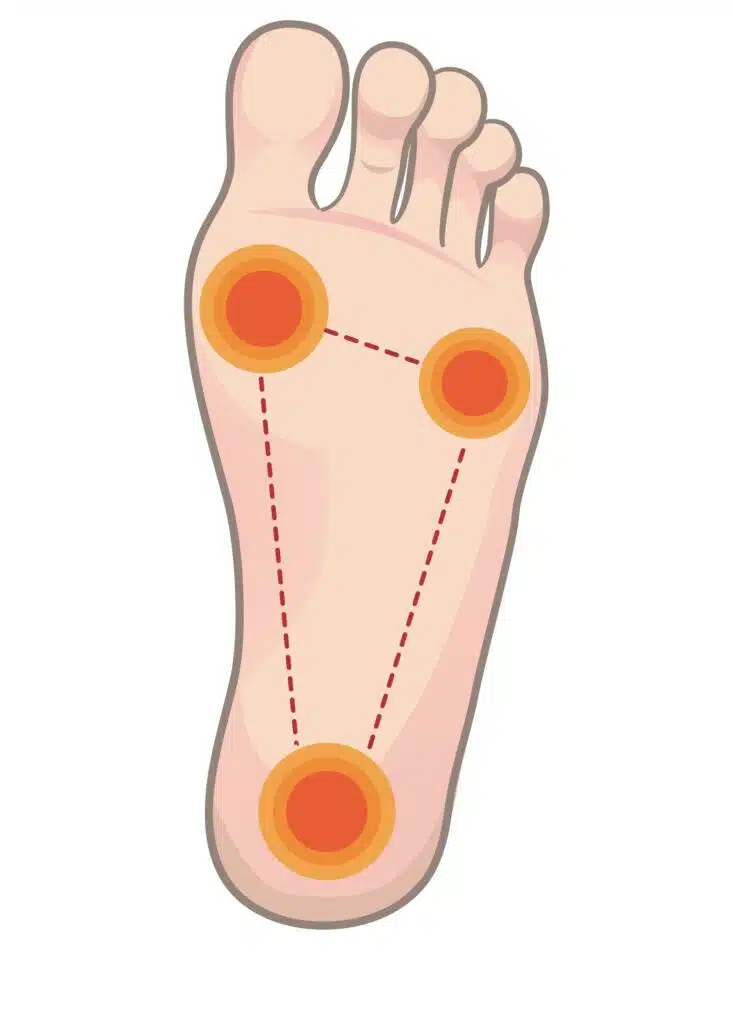
The foot tripod consists of three primary contact points on the bottom of your foot:
The 1st Metatarsal Head: This is the padded area directly underneath your big toe on the ball of your foot. It provides the primary lever for pushing off when you walk or run.
The 5th Metatarsal Head: This is the padded area directly underneath your pinky toe on ball of foot. It helps control lateral side-to-side balance.
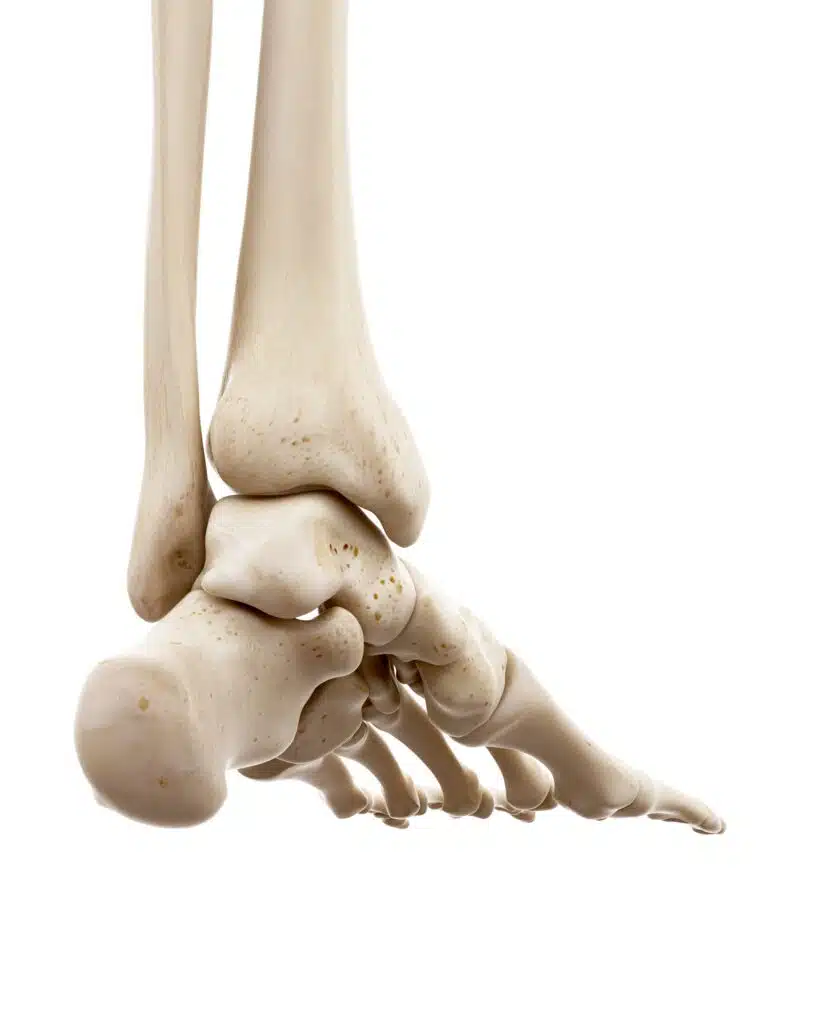
The Calcaneus: This is your heel bone. It serves as the primary shock absorber when your foot strikes the ground.
When you stand, your weight should distribute evenly across these three points. This creates a stable arch and a strong base of support.
Beyond bones and ligaments, your foot is an incredibly complex sensory organ. The soles of your feet contain over 8,000 nerve endings. These nerves constantly read the ground beneath you, sending rapid-fire signals to your brain about texture, slope, and pressure. This rich nerve density makes the foot tripod vital for physical awareness and stability.
Foot Tripod Functionality: More Than Just Standing
The foot tripod does much more than keep you from falling over. It plays a critical role in how your entire body moves and functions.
Proprioception and the Nervous System
Proprioception is your body’s ability to sense its position in space. Because of the massive amount of nerve endings in your feet, the foot tripod acts as the primary sensory gatekeeper for your Autonomic Nervous System (ANS). When your brain receives clear signals from the three points of the tripod, it feels safe. It responds by relaxing unnecessary muscle tension and allowing for fluid, coordinated movement. People who live in shoes all the time tend to rob their brain of important proprioceptive information.
Postural Alignment
Good posture keeps the joints and bones aligned properly to ensure the muscles are being used the right way. It prevents joint surfaces from wearing out at an abnormal pace, a condition that could cause joint pains and degenerative arthritis. Your posture begins at the foot tripod. If your weight collapses inward (pronation) or rolls outward (supination) past the tripod’s boundaries, your knees, hips, and lower back must shift out of alignment to compensate.
Development and Training the Foot Tripod
We are not born walking. We must earn the right to stand upright through a sequence of developmental milestones. During these early stages of development, a baby naturally learns to grip the ground using the foot tripod. They learn to activate the muscles of the foot, ankle, and lower leg to establish a strong anchor.
As adults, we often lose this natural ability. Sitting in chairs all day, wearing narrow shoes, and walking on flat, artificial surfaces dulls the nervous system’s connection to the feet.
Training the tripod involves reinstating the body’s original movement code. This means doing barefoot exercises to actively feel the 1st metatarsal, 5th metatarsal, and calcaneus pressing into the floor. By practicing this conscious engagement, you can remind your nervous system how to properly anchor the body.
Common Issues and Consequences
When the foot tripod breaks down, it causes abnormal foot biomechanics and the structural integrity of your entire body suffers. This breakdown usually stems from a combination of past injuries and progressive muscle weakness.
Causes of Foot Tripod Dysfunction
A previous injury, such as a badly sprained ankle, can permanently alter your biomechanics if not rehabilitated correctly. To avoid pain, your body alters its weight distribution, shifting away from a balanced tripod. Over time, the intrinsic muscles of the foot weaken. When these muscles lose their strength, the arch collapses, and the foot loses its ability to absorb shock.
The Painful Consequences
A weak or dysfunctional foot tripod forces other tissues to do work they were not designed to do. This leads to a host of common physical ailments:
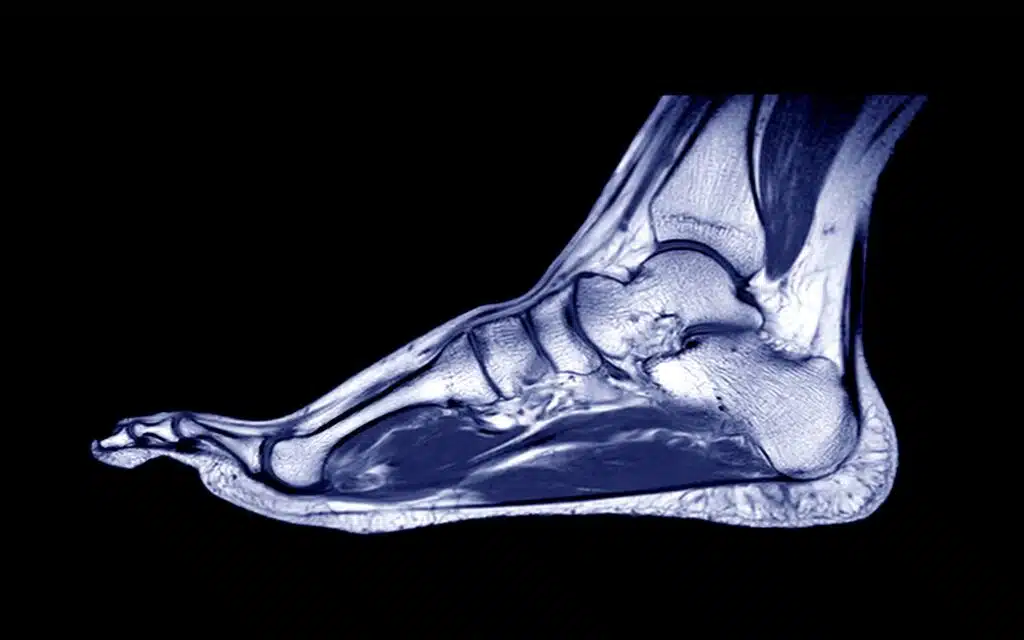
Plantar Fasciitis: When the arch lacks muscular support, the thick band of tissue on the bottom of the foot (the plantar fascia) takes on too much tension and becomes inflamed. A night splint makes the symptoms feel better in the morning after wearing it all night, because the plantar fascia is already stretched before your foot hits the ground first thing in the morning. However, addressing the tripod is necessary for long-term correction.
Bunions and Hammer Toes: Poor weight distribution forces the toes into unnatural angles, eventually causing painful bony deformities.
Knee and Back Pain: If the foot collapses inward, the shin bone rotates inward, putting extreme stress on the knee joint and the lower back.
Assessment and Treatment of the Foot Tripod
Fixing foot tripod dysfunction and restoring normal foot biomechanics requires more than just buying expensive insoles. It requires a comprehensive approach to restore joint mobility and muscle function.
Proper Foot Examination
A thorough examination looks at how your foot behaves under load. A practitioner will assess your alignment, test the flexibility of your ankle joint, and evaluate the strength of the intrinsic foot muscles. They will also look at how your foot interacts with your knee and hip during movements like squatting or walking.
Effective Treatments
I help people with a multitude of sports injuries, frozen shoulder, and runner’s knee using not only chiropractic adjustments but a handful of other techniques to help get people better.
Treating tripod dysfunction typically involves manual therapy to the joints and soft tissue of the foot and ankle.
Chiropractic Adjustments:Chiropractic adjustments are an extremely safe and effective method of restoring proper motion to the small bones of the foot. When the joints move freely, the muscles can fire correctly.
Soft Tissue Therapy: Modalities like the Graston Technique and dry needling help break down scar tissue and relieve tension in the plantar fascia and calf muscles.
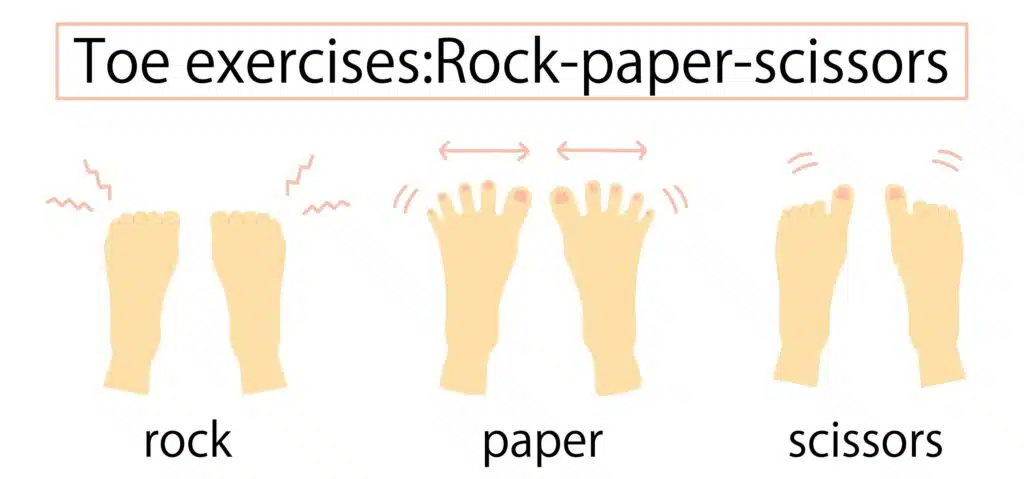
Targeted Activation: Once normal joint mechanics are restored, specific corrective exercises are prescribed. These exercises focus on strengthening the biomechanical weaknesses, teaching you how to actively engage the three points of the tripod and build a resilient arch.
Exercises for the foot
For much more information on strengthening the foot, click the link below.
Your foot tripod is the fundamental base of your body’s structural stability. The simple act of distributing your weight properly between the heel, the base of the big toe, and the base of the pinky toe has profound implications for your nervous system and your posture.
When you lose this balanced connection to the ground, chronic pain and movement limitations often follow. By taking a proactive approach to foot health through proper assessment, manual therapy, and targeted muscle activation, you can rebuild a strong foundation from the ground up. Take the time to kick off your shoes, feel the ground beneath you, and start training your feet for a healthier, pain-free life.
Between early meetings, school pickups, and squeezing in a workout before the day disappears, recovery is one of the first things that slips. When your schedule is packed, the small daily choices matter most, because they're the ones you can actually sustain. Hydrogen...
Psoas tendonitis—also called iliopsoas tendinopathy—is an irritation or inflammation of the iliopsoas tendon that causes deep groin pain in runners. It develops from repetitive hip flexion, training errors, and muscle imbalances. With structured rehabilitation across...
You know the feeling. The first mile feels great, but after you put some miles in, a dull ache settles into your lower back. By the time you finish, you're walking a little stiff, wondering if this is just part of getting older or if something's actually wrong. As a...
A Lateral Ankle Sprain can happen in a split second. You’re coming down from a rebound during a pickup basketball game, or maybe you simply stepped off a curb wrong while rushing to a meeting. Your foot twists inward, and you feel that familiar, sharp pain on the...
An adductor strain, often called a groin pull, is a common injury that can sideline even the most conditioned athletes. This sharp, sudden pain on the inside of the thigh occurs when the adductor muscles are stretched or torn. While particularly prevalent in sports...
Ankle and foot pain can be a persistent and frustrating problem, often misdiagnosed as more common conditions like plantar fasciitis. When the discomfort involves burning, tingling, or numbness along the inside of your ankle or the bottom of your foot, you may be...