An adductor strain, often called a groin pull, is a common injury that can sideline even the most conditioned athletes. This sharp, sudden pain on the inside of the thigh occurs when the adductor muscles are stretched or torn. While particularly prevalent in sports requiring quick directional changes, like soccer, hockey, and football, an adductor strain can affect anyone engaging in physical activity. The immediate discomfort is only one part of the problem; without proper care, this injury can lead to chronic pain, reduced mobility, and a frustratingly long recovery period.
Effective recovery from an adductor strain hinges on an accurate diagnosis and a comprehensive treatment plan. Simply resting is often not enough to address the underlying issues that may have contributed to the injury in the first place, such as muscle imbalances or scar tissue formation. A proper diagnosis helps determine the severity of the strain, which is crucial for creating a treatment strategy that not only heals the muscle but also prevents re-injury. This is where the expertise of a healthcare provider skilled in musculoskeletal health becomes invaluable.
What is an Adductor Strain?
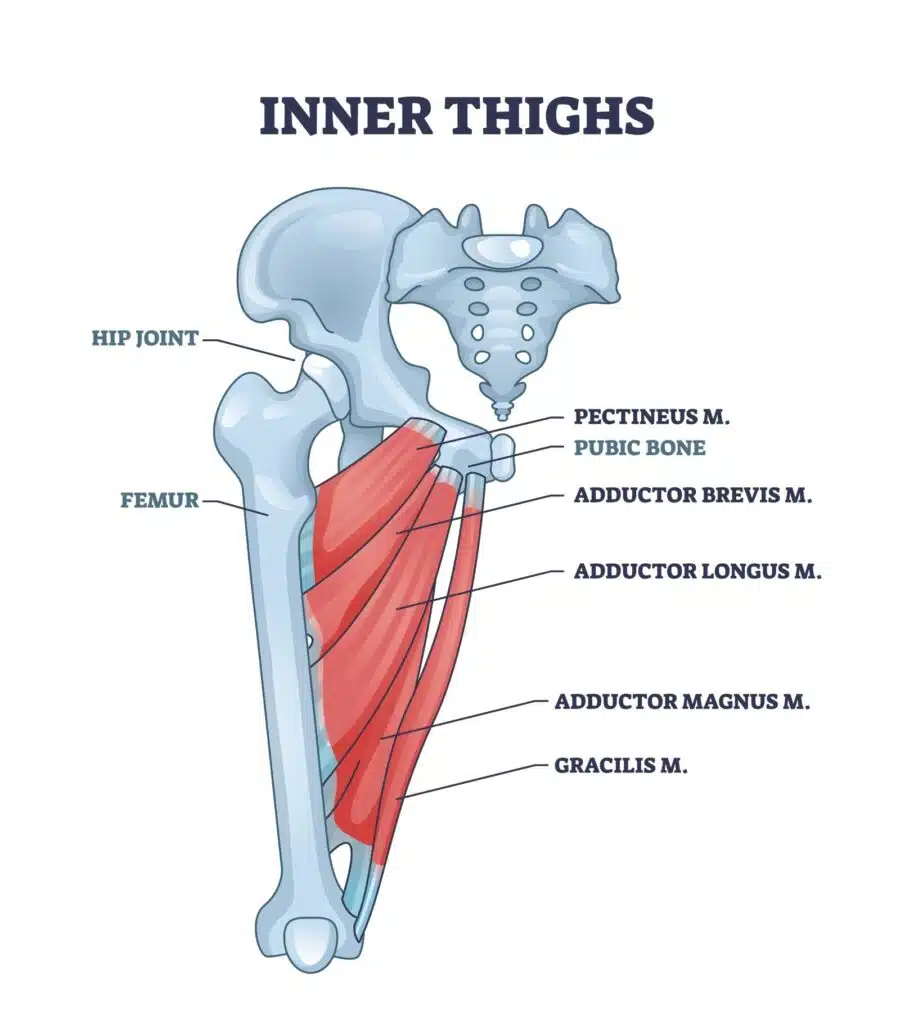
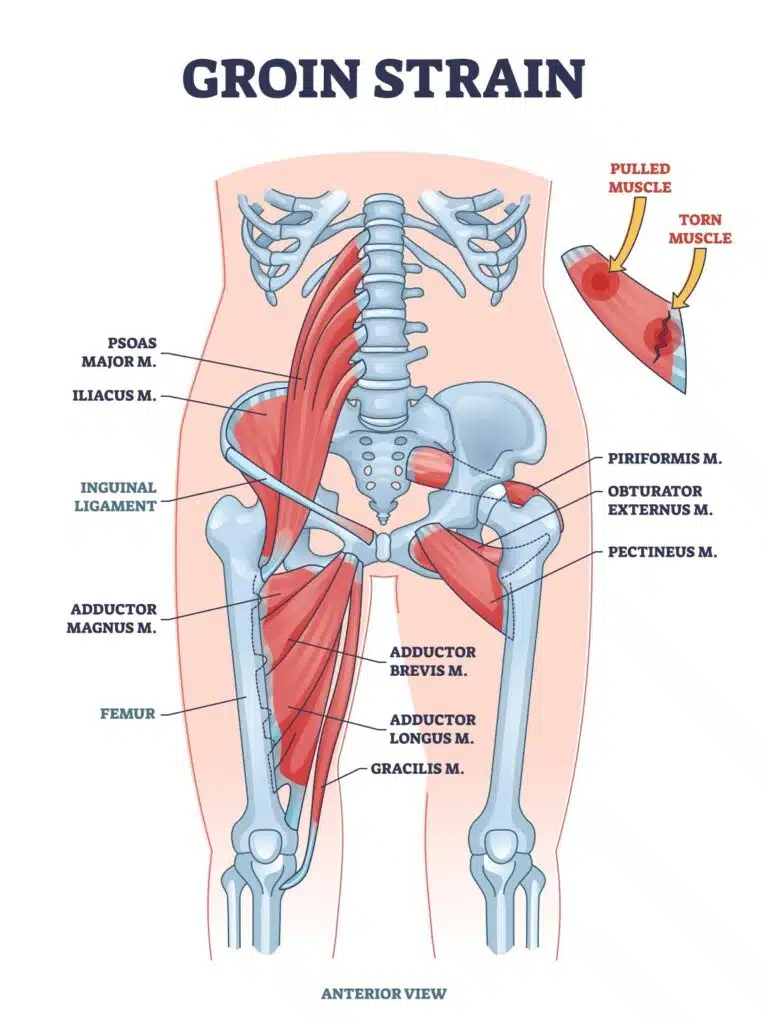
The adductor muscles are a group of five muscles that run from your pubic bone down to the inside of your femur (thigh bone) and tibia (shin bone). Their primary function is to pull your leg toward the midline of your body, an action called adduction. These muscles—the adductor longus, adductor brevis, adductor magnus, pectineus, and gracilis—are crucial for stabilizing the pelvis and enabling powerful movements like kicking, sprinting, and changing direction. Some of these muscles run the entire length of the inner thigh and are called the long adductors. Some muscles only go part-way down the thigh and are known as the short adductors or the groin muscles.
An adductor strain occurs when these muscles are subjected to a force that exceeds their capacity, causing the muscle fibers to stretch or tear. This often happens during explosive or eccentric contractions, where the muscle lengthens under tension.
High-Impact Sports: Activities that require rapid acceleration, deceleration, and side-to-side movements place significant stress on the adductors. Sports like soccer, hockey, football, and tennis are prime examples.
Inadequate Warm-up: Failing to properly prepare the muscles for activity leaves them less pliable and more susceptible to injury.
Poor Conditioning: Weak or inflexible adductor and hip muscles can create imbalances that increase strain. A lack of core stability also contributes to poor biomechanics, placing extra load on the inner thigh muscles.
Previous Injury: Athletes with a history of groin injuries are at a higher risk of re-injury, especially if the initial strain was not fully rehabilitated.
Symptoms of Adductor Strain
The symptoms of an adductor strain can vary depending on the severity of the injury. The most common sign is a sharp pain in the inner thigh, which may have started suddenly during an activity. Other symptoms include:
Pain when bringing your legs together.
Tenderness and swelling along the inner thigh.
Bruising in the affected area.
Difficulty walking, running, or performing athletic movements.
A “popping” sensation at the time of injury.
Chiropractic physicians specializing in sports medicine are highly skilled in diagnosing musculoskeletal injuries like adductor strains. During an evaluation, a chiropractor will perform a thorough physical examination. This includes assessing your range of motion, strength, and palpating the area to pinpoint the exact location of the injury. They will also analyze your movement patterns to identify any underlying biomechanical issues.
To determine the severity of the injury, a grading system is used:
Grade 1 (Mild): A minor stretch or tear of a few muscle fibers. You may experience mild discomfort but typically have minimal loss of strength or mobility.
Grade 2 (Moderate): A partial tear of the muscle fibers. This grade is associated with more significant pain, swelling, and a noticeable loss of strength. Walking may be painful.
Grade 3 (Severe): A complete rupture of the muscle. This is a serious injury characterized by severe pain, significant swelling, and a substantial loss of function. You may be unable to walk without assistance.
A precise diagnosis is fundamental to creating an effective treatment plan. A chiropractor’s expertise ensures that your recovery is built on a solid foundation of understanding exactly what is wrong and why it occurred. This detailed approach allows for a personalized care plan aimed not just at healing the immediate injury, but also at preventing future problems.
A sports-focused chiropractor utilizes a multi-faceted approach to facilitate recovery from an adductor strain. Instead of relying on a single method, they combine several advanced, non-invasive therapies to create a personalized groin strain treatment plan. This strategy is designed to reduce pain, restore mobility, and correct the underlying biomechanical issues to prevent recurrence. The goal is to stimulate the body’s own healing mechanisms for a more complete and efficient recovery.
Kinesio Taping
Kinesio Taping (or K-Taping) is another technique a sports chiropractor may use to support your recovery. This involves applying a special elastic tape to the skin over and around the injured adductor muscles. Unlike rigid athletic tape, Kinesio Tape is designed to mimic the elasticity of human skin, allowing for a full range of motion.
When applied correctly, the tape gently lifts the skin, creating a small space between the skin and the underlying tissues. This decompression can help reduce pressure on pain receptors and improve both blood and lymphatic flow, which aids in reducing swelling. The tape also provides proprioceptive feedback, meaning it increases your brain’s awareness of the muscle’s position. This can help improve muscle activation patterns and provide a sense of stability to the injured area as you return to activity.
Cold Laser Therapy
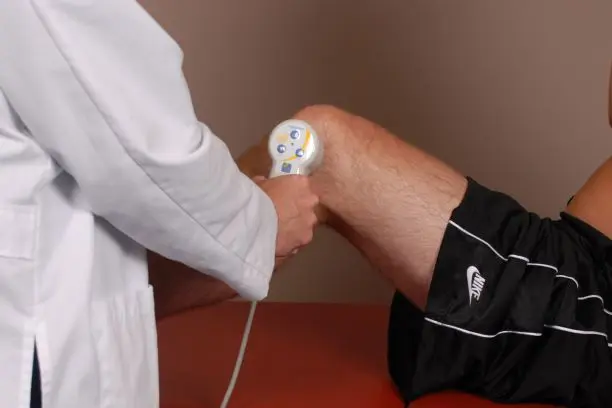
Cold Laser Therapy, also known as Low-Level Laser Therapy (LLLT), is a non-invasive treatment that uses specific wavelengths of light to interact with tissue. It is a powerful tool for accelerating healing and reducing pain and inflammation associated with soft tissue injuries.
When the laser is applied to the injured adductor muscle, the light energy penetrates the skin and is absorbed by the cells. This process stimulates the mitochondria—the powerhouses of the cells—to produce more ATP, which is the energy currency of the cell. This increase in cellular energy enhances metabolic activity, speeding up tissue repair. Furthermore, cold laser therapy has been shown to have a significant anti-inflammatory effect by reducing the production of inflammatory mediators. It also helps to decrease pain by influencing nerve cell function. Its ability to promote healing at a cellular level makes it an excellent component of a comprehensive groin strain treatment plan.
Graston Technique
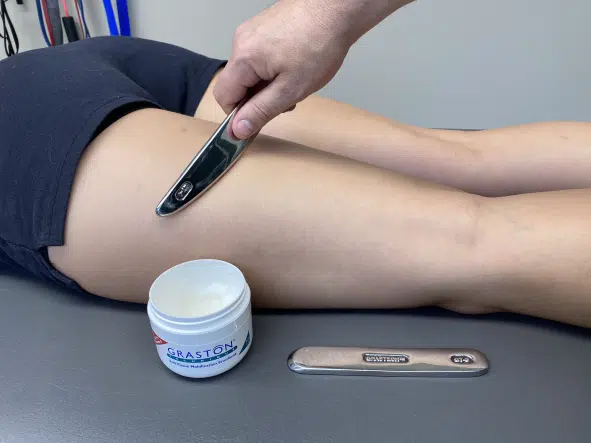
The Graston Technique is a form of instrument-assisted soft tissue mobilization (IASTM) that is particularly effective for treating soft tissue injuries like an adductor strain. It uses specially designed stainless steel instruments to detect and treat areas exhibiting soft tissue fibrosis or chronic inflammation.
When a muscle is torn, the body repairs it by laying down scar tissue. This tissue is less flexible and more disorganized than healthy muscle tissue, which can lead to restricted movement and persistent pain. During a Graston Technique session, the provider glides the instruments over the skin of the inner thigh. The tools magnify abnormalities in the muscle, allowing the practitioner to precisely locate adhesions and restrictions. The instruments are then used to break down this problematic scar tissue, which helps to realign the muscle fibers and restore normal function. For athletes, this process is invaluable as it can significantly improve flexibility, reduce pain during movement, and shorten the recovery timeline.
Cupping Therapy
Cupping therapy is an ancient practice that has gained modern recognition for its effectiveness in treating muscle pain and tension. The process involves placing cups on the skin to create suction. This negative pressure lifts the underlying tissue, separating its layers and creating space for improved fluid flow. The lifting action helps to release tension and adhesions in the muscle and fascia, reducing stiffness and improving range of motion. By decompressing the injured tissue, cupping can play a significant role in accelerating the healing process.
Corrective Exercises
A crucial component of any effective rehabilitation plan is the integration of corrective exercises. Dealing with the immediate pain is important, but working to strengthen the injured muscle and correct the imbalances that contributed to the strain is what creates lasting change. Simply resting the muscle is not enough; it must be methodically reconditioned to handle future physical demands. The reason the adductor muscle was damaged is that it was not prepared for the load that was demanded of it.
Your chiropractor will prescribe a tailored program of strengthening and stretching exercises specific to your adductor muscles. This begins with gentle, pain-free movements and progresses as you heal. Examples of exercises that might be included are:
Isometric Adductor Squeezes: Contracting the muscle without moving the leg to re-establish neuromuscular control.
Side-Lying Hip Adduction: Slowly lifting the bottom leg toward the ceiling to build strength.
Standing Adductor Stretches: Gently lengthening the inner thigh muscles to improve flexibility.
Glute Bridges: Strengthening the supporting hip and gluteal muscles to reduce the load on the adductors.
The precise selection and progression of these exercises are key to a successful recovery and preventing re-injury.
The Road to Recovery
Recovering from an adductor strain is rarely a linear journey. Because every athlete’s body, biomechanics, and injury severity are unique, a “one-size-fits-all” approach simply doesn’t work. True recovery—the kind that gets you back on the field without fear of re-injury—relies on a personalized treatment plan designed specifically for you.
The Importance of a Personalized Plan
Why is customization so critical? Two athletes might suffer a Grade 2 adductor strain, but the root causes could be vastly different. One might have weak glutes that force the adductors to overcompensate, while the other might have restricted hip mobility due to a previous ankle injury.
A generic rehabilitation program might heal the tissue, but it won’t address those underlying “why” factors. A sports-focused chiropractor takes a holistic view, evaluating your entire kinetic chain. They build a plan that doesn’t just treat the pain but corrects the specific dysfunctions that led to the injury. This tailored approach ensures that your rehabilitation exercises, manual therapies, and return-to-play protocols are exactly what your body needs to heal fully.
Patience is often the hardest part of recovery, but understanding the general timeline can help manage expectations. Recovery times vary significantly based on the severity of the strain and whether the issue is acute or chronic.
Acute Strains:
Grade 1 (Mild): With proper care, mild strains often heal within 1 to 3 weeks. You might return to light activity sooner, but full intensity should wait until you are pain-free.
Grade 2 (Moderate): These involve more significant tissue damage and typically require 3 to 6 weeks of rehabilitation. Rushing this phase is a common mistake that leads to setbacks.
Grade 3 (Severe): Complete tears are serious injuries that can take 3 to 4 months or longer to heal. In some cases, surgical consultation may be necessary, followed by extensive post-operative rehab.
Chronic Strains:
If an adductor strain has been nagging you for months (often called adductor tendinopathy), the timeline is less predictable. Because the tissue has undergone degenerative changes, recovery focuses on remodeling the tendon structure. This process requires consistent, progressive loading and can take 3 to 6 months of dedicated work to resolve completely.
Your Partner in Rehabilitation and Prevention
Navigating this timeline requires expert guidance. This is where a chiropractor becomes an invaluable partner. They act as the quarterback of your recovery, monitoring your progress and adjusting your plan as you heal.
Rehabilitation isn’t just about waiting for pain to vanish; it’s an active process. We will guide you through specific phases:
Acute Phase: Reducing pain and inflammation while protecting the tissue.
Sub-Acute Phase: Restoring range of motion and introducing gentle loading.
Remodeling Phase: Progressive strengthening to rebuild tissue tolerance.
Return-to-Sport: Sport-specific drills to ensure you can handle the demands of your activity.
Perhaps most importantly, chiropractic care focuses heavily on prevention. By addressing the biomechanical faults—like pelvic misalignment or muscle imbalances—that predisposed you to injury, they help you build a more resilient body. The goal isn’t just to get you back to where you were, but to get you back stronger, moving better, and less likely to face another adductor strain in the future.
Conclusion
Dealing with an adductor strain can be physically limiting and mentally frustrating, especially when it interrupts your active lifestyle or daily routine. As we have explored, this injury is more than just a simple muscle pull; it often signals deeper biomechanical imbalances that require a thoughtful, comprehensive approach to resolve. Chiropractic care, particularly when led by a physician with expertise in sports medicine, offers a robust path forward. It goes beyond merely masking symptoms with temporary fixes, focusing instead on identifying the root cause and restoring optimal function to your entire musculoskeletal system.
By integrating advanced treatments like the Graston Technique, cupping therapy, cold laser therapy, and personalized corrective exercises, chiropractic care provides a holistic solution. It addresses the immediate pain while simultaneously strengthening the body against future injuries. This method aligns perfectly with a health-conscious approach, prioritizing sustainable, drug-free recovery that helps you get back to your professional and family life with renewed energy and resilience.
If you are struggling with nagging groin pain or suspect you have suffered an adductor strain, don’t wait for the injury to become chronic. The road to recovery starts with a professional diagnosis and a personalized plan tailored to your unique needs. Schedule a consultation today to take the first step toward a stronger, pain-free future. Your body (and your active lifestyle) will thank you.
A Lateral Ankle Sprain can happen in a split second. You’re coming down from a rebound during a pickup basketball game, or maybe you simply stepped off a curb wrong while rushing to a meeting. Your foot twists inward, and you feel that familiar, sharp pain on the...
Ankle and foot pain can be a persistent and frustrating problem, often misdiagnosed as more common conditions like plantar fasciitis. When the discomfort involves burning, tingling, or numbness along the inside of your ankle or the bottom of your foot, you may be...
That persistent, nagging pain on the inside of your knee can be a frustrating and confusing problem, which might be pes anserine bursitis. It might show up during your morning run, make climbing a flight of stairs a painful chore, or even ache during a simple walk....
That persistent, nagging pain on the side of your hip or deep in your buttock that makes walking, climbing stairs, or even sleeping on your side uncomfortable might be more than just a simple muscle strain. This common issue is often identified as gluteal...
It’s a scenario familiar to many athletes and active individuals: a quick plant of the foot to change direction, followed by a sudden, unmistakable "pop" from deep within the knee. This moment often marks a significant disruption to a person's athletic pursuits and...
Think of a four-legged stool, simple and balanced. If all four legs are strong, the stool is sturdy. But if one leg is weak or missing, it becomes unstable. This analogy is what I use to explain my treatment philosophy. It can apply to musculoskeletal problems or...