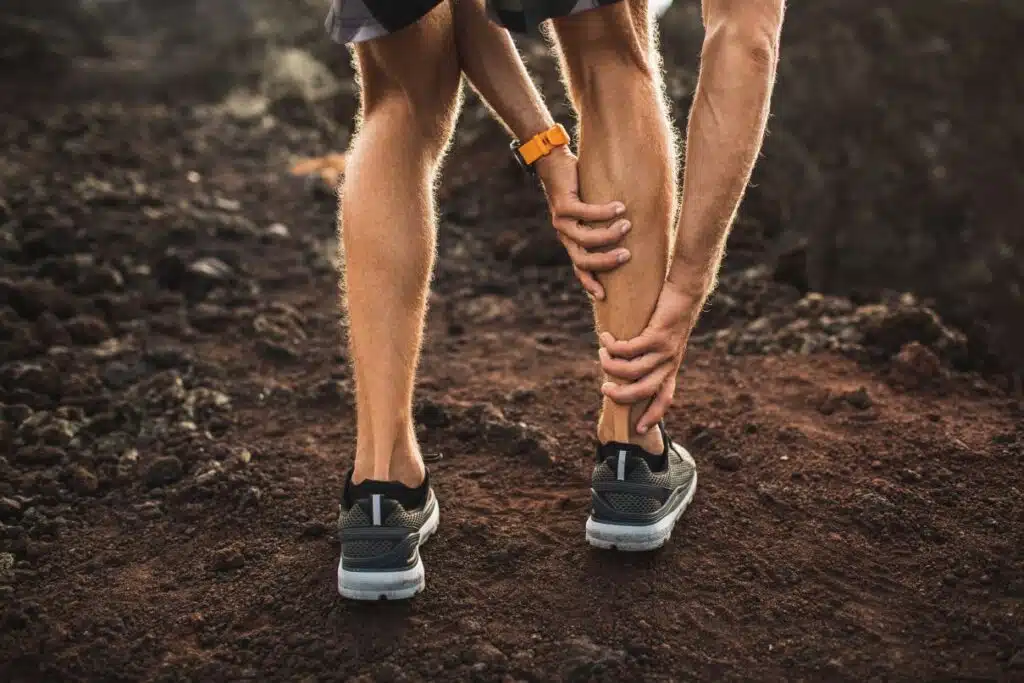
A Lateral Ankle Sprain can happen in a split second. You’re coming down from a rebound during a pickup basketball game, or maybe you simply stepped off a curb wrong while rushing to a meeting. Your foot twists inward, and you feel that familiar, sharp pain on the outside of your ankle. This is the classic presentation of a lateral ankle sprain, one of the most common musculoskeletal injuries we see in both competitive athletes and active professionals.
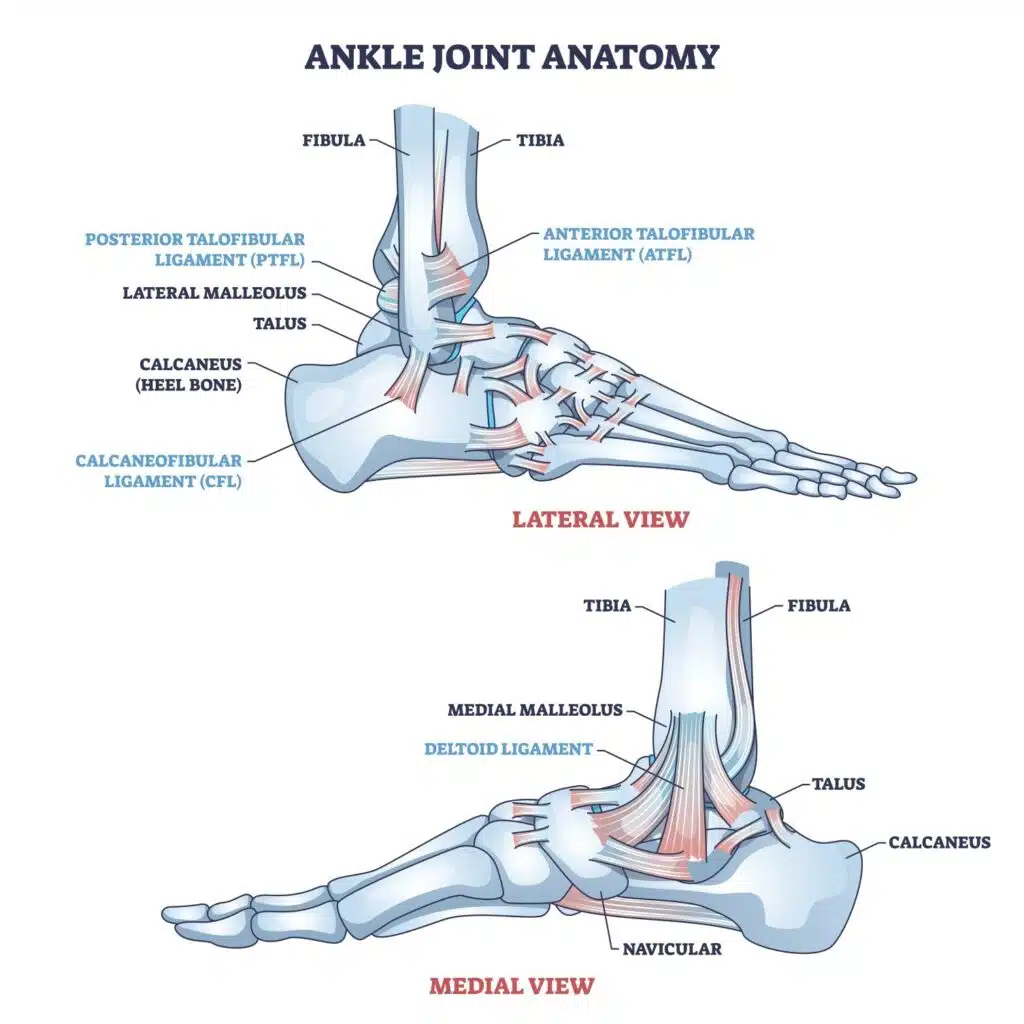
While it is easy to dismiss a sprained ankle as a minor nuisance, something to “walk off” or ice for a day before returning to your routine, the reality is more complex. The lateral ligaments of the ankle are crucial for stability. When they are overstretched or torn, usually during an inversion sprain (where the foot rolls inward), the mechanical stability of the joint is compromised.
Without proper management, what starts as a simple sprain can evolve into chronic ankle instability, leading to recurrent injuries that keep you away from the activities you love. My goal is to guide you through a comprehensive recovery process that heals the immediate injury and fortifies your body against future setbacks.
Understanding Lateral Ankle Sprains
A lateral ankle sprain involves damage to ligaments on the outside of the ankle, but why does this happen? Sometimes it is purely accidental, like landing on an opponent’s foot, but there are usually predisposing factors. Limited dorsiflexion (the ability to pull your toes toward your shin), poor proprioception (balance), or even restrictions in the hip can force the ankle into vulnerable positions.
This is where the chiropractic perspective shines. We don’t just treat the pain; we analyze the biomechanics that may have contributed to the injury. By choosing a chiropractor for lateral ankle sprain management, you are opting for a provider who understands musculoskeletal continuity. We look at how the bones of the foot, the tibia, the fibula, and even the pelvis interact to create efficient (or inefficient) movement.
Initial Treatment: Beyond RICE for Lateral Ankle Sprains
The old acronym R.I.C.E. (Rest, Ice, Compression, Elevation) had its place, but modern sports medicine has evolved. There is not one perfect acronym that encompasses everything but things like ARITA (Active Rest Is The Answer) and MELT (Movement, Exercise, Laser & Treatment) start getting closer. It has generally been found that icing for more than a day or two will decrease healing. So while we want to manage inflammation, we also want to encourage tissue healing and fluid drainage. In my practice, we utilize several advanced modalities to accelerate the initial phase of healing.
Relative Rest and Protection
“Rest” does not mean complete bed rest. Complete immobilization can actually lead to stiffness and muscle atrophy. Instead, we advocate for “relative rest.” I want you to move the area around, but not go crazy. Protect the injured tissue, like with a brace or taping, while keeping the surrounding areas active. We want you to move as much as pain allows, as movement decreases pain and stimulates the lymphatic system to clear out swelling.
Voodoo Flossing
This is a powerful compression technique involving a thick latex band wrapped tightly around the injured joint. You have to be careful and know what you are doing. We wrap the ankle, have you perform specific movements for a short duration, and then release the band. The idea is that the compression forces swelling out of the joint, and the release causes a rush of fresh, oxygenated blood to flood the area. This helps restore sliding surfaces between tissues and can significantly improve range of motion immediately after application.
Kinesio Taping
You have likely seen colorful tape on professional athletes. Kinesio taping is not just for show; it serves a microscopic function. The tape microscopically lifts the skin away from the underlying fascia. This creates a bit of space that improves circulation and lymphatic drainage, helping to reduce that stubborn bruising and swelling associated with a lateral ankle sprain. With moderate to severe swelling, you can feel the indentations where it is draining and even clear out a nasty bruise within days. Furthermore, the tactile sensation of the tape on your skin provides sensory input to the brain, improving proprioception (your body’s awareness of where it is in space).
Graston Technique
Once the acute inflammation has settled slightly, we need to address the soft tissue quality. Graston Technique is a form of instrument-assisted soft tissue mobilization (IASTM). We use specialized stainless steel instruments to detect and treat scar tissue and fascial restrictions. When ligaments heal, they often lay down collagen in a haphazard “spiderweb” pattern rather than straight, strong lines. Graston Technique helps realign these fibers, ensuring the healed ligament is strong and flexible rather than stiff and brittle.
Cold Laser Therapy
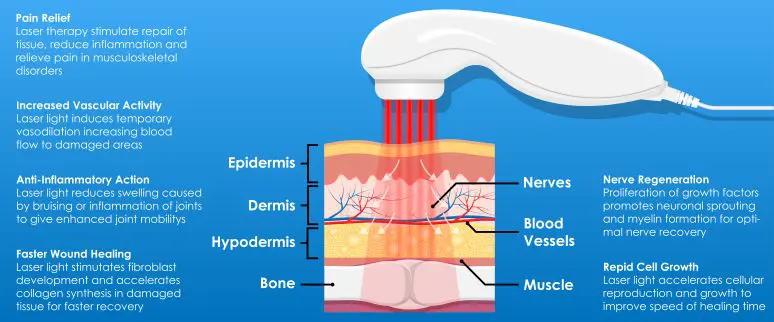
To boost the cellular healing process, we employ cold laser therapy (low-level laser therapy). This modality uses specific wavelengths of light to interact with tissue. It is thought to stimulate the mitochondria within your cells to produce more energy (ATP), which accelerates tissue repair, switches on genes, and reduces inflammation without the heat associated with other lasers. It is a painless, non-invasive way to jumpstart recovery for an inversion sprain.
Corrective Exercises and Rehabilitation
Treating the pain is only half the battle. The other half is ensuring the ankle can withstand the demands of your daily life, whether that is running a marathon or chasing your kids around the park. Rehabilitation is crucial to prevent chronic instability, a condition where the ankle feels like it is constantly “giving way.”
Restoring Ankle Range of Motion
After a lateral ankle sprain, the ankle often becomes stiff, particularly in dorsiflexion. If you cannot bend your ankle properly, your knee and hip have to compensate, leading to issues up the chain. We use specific adjustments, mobilizations and stretches—like the knee-to-wall test—to ensure you regain full range of motion.
Proprioceptive Training for lateral ankle sprains
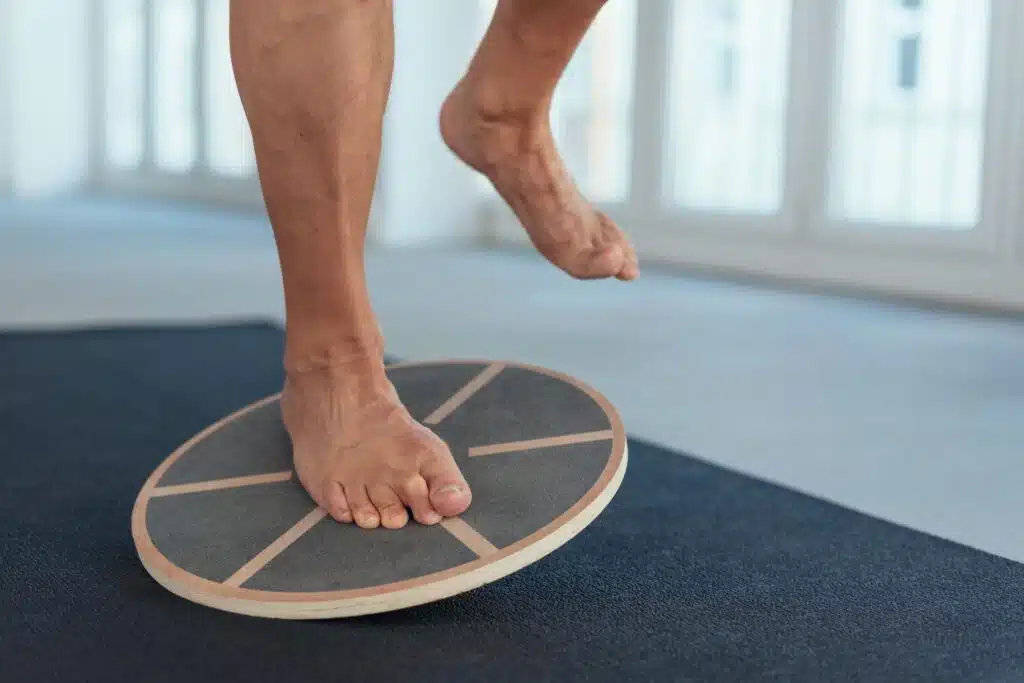
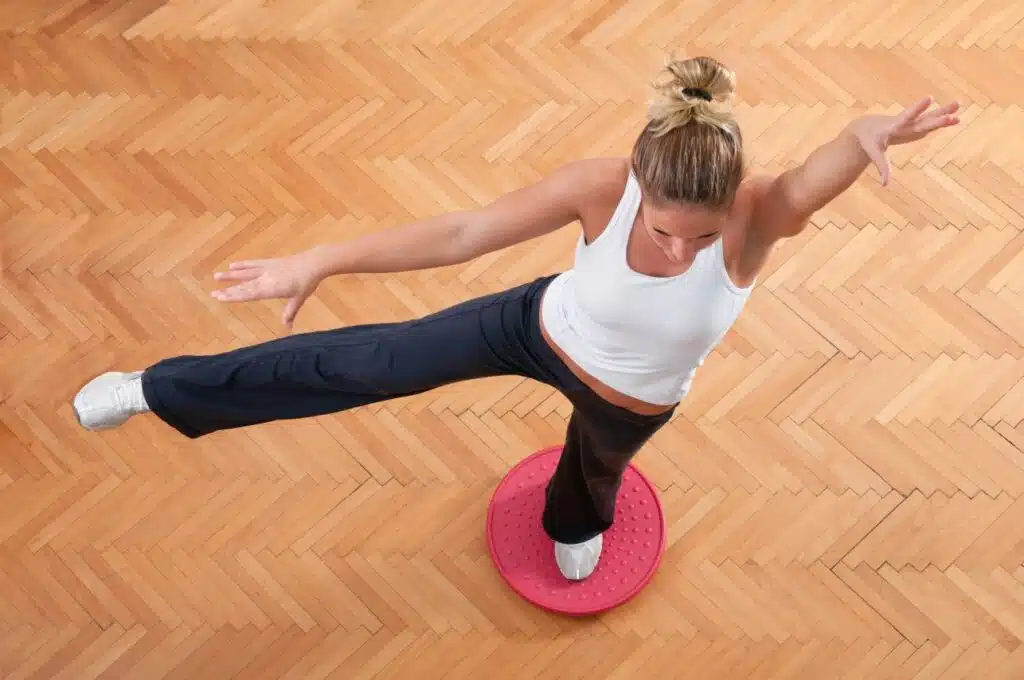
Ligaments do more than hold bones together; they are also filled with nerve endings that tell your brain where your foot is. When you suffer an inversion sprain, these sensors are damaged. This is why people often sprain the same ankle repeatedly—their brain has lost the connection to the foot. We retrain this using balance exercises, starting on stable ground (like single-leg stands) and progressing to unstable surfaces like foam pads or wobble boards.
Progressive Strengthening
We must strengthen the muscles that protect the ankle, specifically the peroneals on the outside of the lower leg. These muscles act as the active defense against rolling your ankle. Using resistance bands, we strengthen the ankle in all four planes of motion: eversion (turning out), inversion (turning in), dorsiflexion (pulling up), and plantarflexion (pointing down).
The Chiropractic Advantage in Management
You might wonder why you should see a chiropractor for an ankle injury rather than just a general practitioner. The answer lies in our natural, holistic, hands-on approach.
Chiropractic physicians in sports medicine are uniquely positioned to manage lateral ankle sprain cases because we combine manual therapy with rehabilitation. Analgesic non-steroidal anti-inflammatory drugs (NSAIDs) tend to hinder the natural healing process by overly inhibiting inflammation.
We can adjust the talus or calcaneus bones if they have shifted due to the trauma of the sprain—something that can block normal movement and is often overlooked in conventional care.
We focus on long-term outcomes. Our goal isn’t just to get you walking pain-free; it is to get you back to your optimal performance level. We look at your footwear, your gait, and your training load to identify any variables that might predispose you to injury.
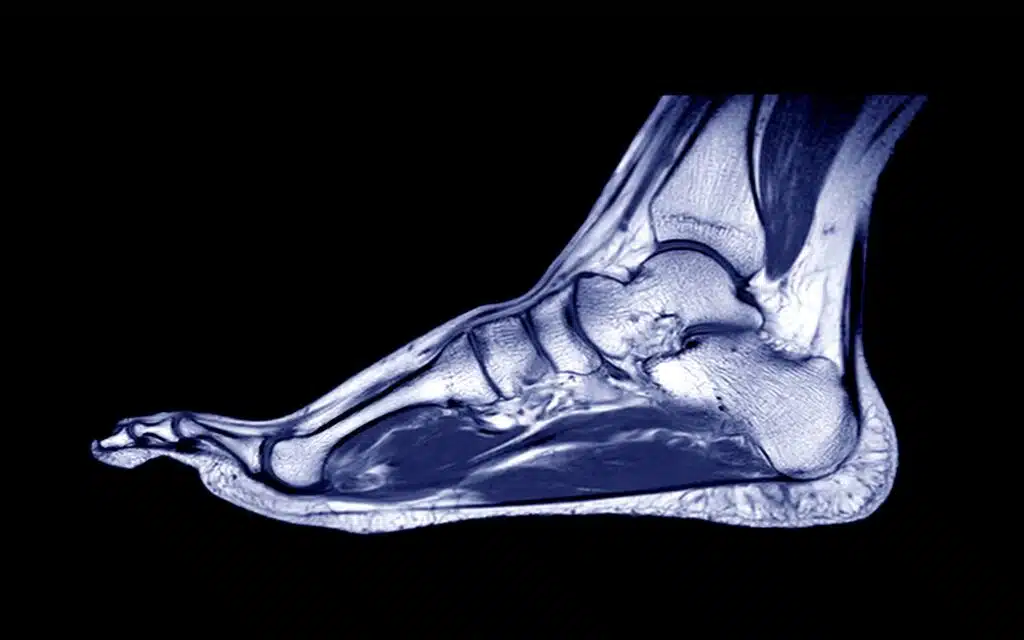
Furthermore, we believe in collaboration. We frequently work alongside physical therapists, orthopedists, and trainers to ensure you have a multidisciplinary team supporting your recovery. If imaging (like an X-ray or MRI) is needed to rule out a fracture or severe tear, we can order those and interpret them to guide your care plan.
Conclusion
A lateral ankle sprain is a significant injury that deserves professional attention. Ignoring it or rushing back to activity too soon can lead to a cycle of pain and instability that affects your quality of life.
By seeking care from a chiropractic physician, you are choosing a path that prioritizes structural integrity, functional movement, and long-term wellness. Through advanced treatments like Graston Technique and cold laser therapy, combined with targeted rehabilitation, we can help you navigate the road to recovery efficiently.
If you have recently suffered an inversion sprain or are dealing with an old ankle injury that just won’t feel “right,” consider scheduling an evaluation. Your active life depends on a solid foundation—let’s make sure your ankles are up to the task.
An adductor strain, often called a groin pull, is a common injury that can sideline even the most conditioned athletes. This sharp, sudden pain on the inside of the thigh occurs when the adductor muscles are stretched or torn. While particularly prevalent in sports...
Ankle and foot pain can be a persistent and frustrating problem, often misdiagnosed as more common conditions like plantar fasciitis. When the discomfort involves burning, tingling, or numbness along the inside of your ankle or the bottom of your foot, you may be...
That persistent, nagging pain on the inside of your knee can be a frustrating and confusing problem, which might be pes anserine bursitis. It might show up during your morning run, make climbing a flight of stairs a painful chore, or even ache during a simple walk....
That persistent, nagging pain on the side of your hip or deep in your buttock that makes walking, climbing stairs, or even sleeping on your side uncomfortable might be more than just a simple muscle strain. This common issue is often identified as gluteal...
It’s a scenario familiar to many athletes and active individuals: a quick plant of the foot to change direction, followed by a sudden, unmistakable "pop" from deep within the knee. This moment often marks a significant disruption to a person's athletic pursuits and...
Think of a four-legged stool, simple and balanced. If all four legs are strong, the stool is sturdy. But if one leg is weak or missing, it becomes unstable. This analogy is what I use to explain my treatment philosophy. It can apply to musculoskeletal problems or...